
Ohio Public Records
Ohio public records are open to anyone who asks. The state has 88 counties and each one keeps its own set of court files, property documents, and vital records. You can search many of these public records online through county clerk websites, the Ohio Court of Claims portal, and state agency databases. The Ohio Public Records Act, found in Ohio Revised Code Chapter 149, gives every person the right to inspect and copy records held by any public office. You do not need to say who you are or why you want a record. Some counties let you look up case dockets, deed transfers, and birth or death index data from home. For certified copies or sealed file requests, you may need to visit the clerk in person or send a written request by mail.
Ohio Public Records Overview
Ohio Public Records Act
The Ohio Public Records Act sits in Ohio Revised Code Chapter 149. Under R.C. 149.43(A)(1), a public record is any record kept by a public office at the state, county, city, village, township, or school district level. That covers a huge range of documents. Court filings, police reports, property deeds, meeting minutes, budget reports, and agency correspondence all fall under the law. Any person can ask to see them.
Public offices must hand over records "promptly" when asked. The law does not set a hard deadline, but routine items like meeting minutes or budget documents should be ready right away. Larger requests take more time. The office can charge for copies at cost, which is usually about $0.05 per page for standard paper. They cannot charge you just to look at a record. R.C. 149.43(B)(4) says no office can make you give your name or explain why you want a file.
There are some things you cannot get. Medical records, active law enforcement investigation files, trial prep documents, juvenile case records, and adoption files are all exempt. If a record has both public and exempt parts, the office must give you the public parts and redact the rest. Each redaction counts as a partial denial. The office has to explain what law covers each blacked-out section.
Note: Ohio elected officials must complete three hours of public records training each term under R.C. 109.43 and R.C. 149.43(E)(1).
Where to Search Ohio Public Records
Ohio splits record keeping across county and state offices. Each county has a Clerk of Courts, a Recorder, an Auditor, a Probate Court, and a Health Department. The Clerk of Courts handles case filings for the Court of Common Pleas. The Recorder keeps deeds and mortgages. The Auditor tracks property values and tax data. Probate Court stores marriage licenses, estate files, and guardianship orders. The Health Department holds birth and death certificates for local events.
At the state level, several agencies hold Ohio public records. The Supreme Court of Ohio oversees the court system and sets rules for records access. The Ohio Department of Health Bureau of Vital Statistics keeps a central index of births from December 20, 1908 to present and deaths from 1971 to present. The fee for a birth or death record search is $21.50 per record as of January 1, 2025. The Ohio Secretary of State Business Search tool lets you look up corporations, LLCs, trade names, and other filings. You can search for free by business name or registration number.
The state portal at ohio.gov links to many of these databases in one spot. You can find court docket searches, BMV records, professional license lookups, and more.
The Ohio Court of Claims handles disputes about public records access. If a government office turns you down, you can file a complaint with the court for a $25 fee under R.C. 2743.75. As of April 9, 2025, you must send the office a complaint form and give them three business days to fix the problem before you file with the court. All cases start with mediation through a staff attorney or magistrate.

The screenshot above shows the Ohio Revised Code page for Chapter 149, which lays out the full text of the Public Records Act and all its exemptions.
Ohio Court Public Records
Ohio has a Court of Common Pleas in each of its 88 counties. This is the main trial court. It handles felony cases, civil disputes, domestic relations matters like divorce and custody, and probate issues like estates and guardianships. The Clerk of Courts in each county files, dockets, and preserves all pleadings and case documents. Most of these are public records you can ask to see.
Many counties now offer online case search tools. Franklin County, for example, runs Case Information Online where you can look up criminal, civil, domestic, and appellate cases filed with the Common Pleas Court. Cuyahoga County provides a docket search portal for its court records. Hamilton County lets you search court records through courtclerk.org. Not every county has the same level of online access, but the trend is moving that way. Some smaller counties still need you to call or visit to pull case files.
Municipal courts handle smaller cases. Traffic tickets, misdemeanors, small claims, and civil cases under $15,000 go here. For instance, the Franklin County Municipal Court offers a free online records search. Clark County Municipal Court keeps computerized records going back to January 1, 1990, and you can reach them toll-free at (800) 544-1694.

The Ohio state government portal provides links to courts, agencies, and databases across the state for searching public records.
Ohio Property Public Records
Every county has a Recorder who keeps land records. Deeds, mortgages, liens, easements, plats, and other real estate documents go on file here. Most Recorder offices now have online search tools. The Auglaize County Recorder, for instance, maintains property records going back to 1848. Lorain County records are searchable online from 1988 forward through the county Recorder's website, with copy fees at $2.00 per page for recorded documents.
County Auditors track property values and tax assessments. You can use their websites to look up parcel data, tax history, and ownership details. The Clermont County Auditor links directly to the Recorder's document search so you can pull up deeds in one step. Many counties use GIS mapping systems that let you click a parcel on a map and see tax info, deed references, and even aerial photos.
Watch out for deed scams. The Clermont County Recorder warns that private companies send letters offering certified deed copies for $80 to $90, but the actual cost from the Recorder is only about $7 for an average three-page deed ($2 per page plus $1 for certification). Get your copies straight from the county.
Vital Records in Ohio
Birth and death records go through two channels in Ohio. Each county Health Department acts as the local registrar and can issue certified copies for events that took place there. The state Bureau of Vital Statistics at the Ohio Department of Health keeps a central file of births from December 20, 1908 and deaths from 1971 forward.
The state search fee is $21.50 per record, even if nothing turns up. You can order online, by mail, or in person. Online orders accept Visa, Mastercard, Discover, and American Express. Mail orders go to Ohio Department of Health, Bureau of Vital Statistics, PO Box 15098, Columbus, Ohio 43215-0098. In-person service is available at over 100 local health departments for same-day copies. The state office at 4200 Surface Road, Columbus is open Monday through Friday, 10:00 AM to 2:00 PM for expedited birth records only.
Marriage licenses come from the county Probate Court where the license was issued. Most counties charge $2.00 for a certified copy. Divorce records sit with the Clerk of Courts in the county where the case was filed. These are separate systems. The Bureau of Vital Statistics does not handle marriage or divorce records at all.
Death records older than 50 years and birth records older than 125 years may be sent to the Ohio History Connection for archival storage. All death records from before 1971 are already there.
Ohio Sunshine Laws and Public Records Help
The Ohio Attorney General's Office runs a Public Records Unit that helps both requesters and government offices. They publish the Ohio Sunshine Laws Manual, a guide to the Public Records Act and the Open Meetings Act, with links to court decisions and online tools. Training is required by law for all elected officials, and the AG provides both in-person and online options.
If a public office denies your request, there are a few paths forward. The Attorney General offers a free mediation program that has resolved about 70% of the disputes brought to it. You can also file a formal complaint with the Ohio Court of Claims for $25. The court first sends your case to mediation. If that fails, a Special Master reviews the case and sends a recommendation to a judge. The judge then issues a final order.
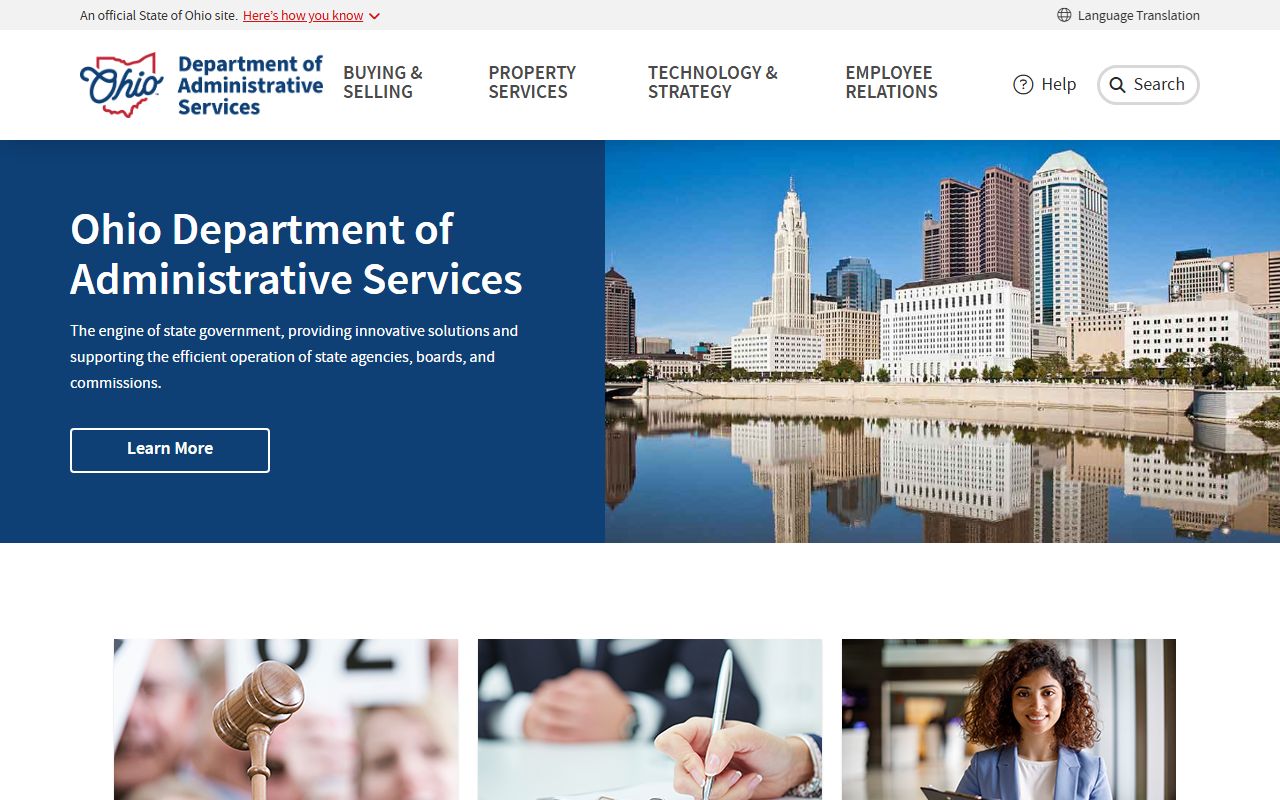
The Ohio Department of Administrative Services runs the State Records Program under R.C. 149.33, setting retention schedules for all state agency records.
The Ohio Auditor of State also plays a role. The Open Government Unit in the Auditor's office checks whether public offices comply with records training rules during financial audits. They can be reached at (800) 282-0370. The Attorney General's Public Records Unit is at 30 E. Broad St., 16th Floor, Columbus, Ohio 43215, or call (800) 282-0515.
How to Request Ohio Public Records
Making a public records request in Ohio is simple. You do not need a form. You do not need to put it in writing, though writing helps. Walk into any public office and ask for what you want. Phone and email requests work too. Under the law, you pick the format. Paper, electronic, or whatever medium the office uses in normal operations.
You should be as specific as you can about what records you need. Vague requests can be turned down, but the office must tell you how their records are organized so you can narrow your ask. If they have what you want, they hand it over. Copies run about $0.05 per page. Certified copies cost more.
Special rules apply to body camera and dash camera video. Law enforcement can charge up to $75 per hour of video or $750 total for preparing these records. They must give you a cost estimate within five business days. No fee applies if you are the victim or the victim's lawyer or insurer.
- Be specific about which records you need
- You do not have to give your name or reason
- Expect to pay about $0.05 per page for copies
- Certified copies cost extra depending on the office
- Offices must respond promptly to routine requests
If you get a denial, ask for the legal reason in writing. Under R.C. 149.43(B)(3), the office must cite the specific law that covers the exemption. Redactions must be visible and each one has to come with an explanation. Keep a copy of your request and any response you get.
Ohio Public Records and the Legislature
The Ohio General Assembly sets the rules that govern public records across the state. Both the Ohio House of Representatives and the Ohio Senate publish session records, committee minutes, and bill text online. Legislative records are public. You can track a bill, read committee testimony, and download fiscal analyses from the General Assembly websites.
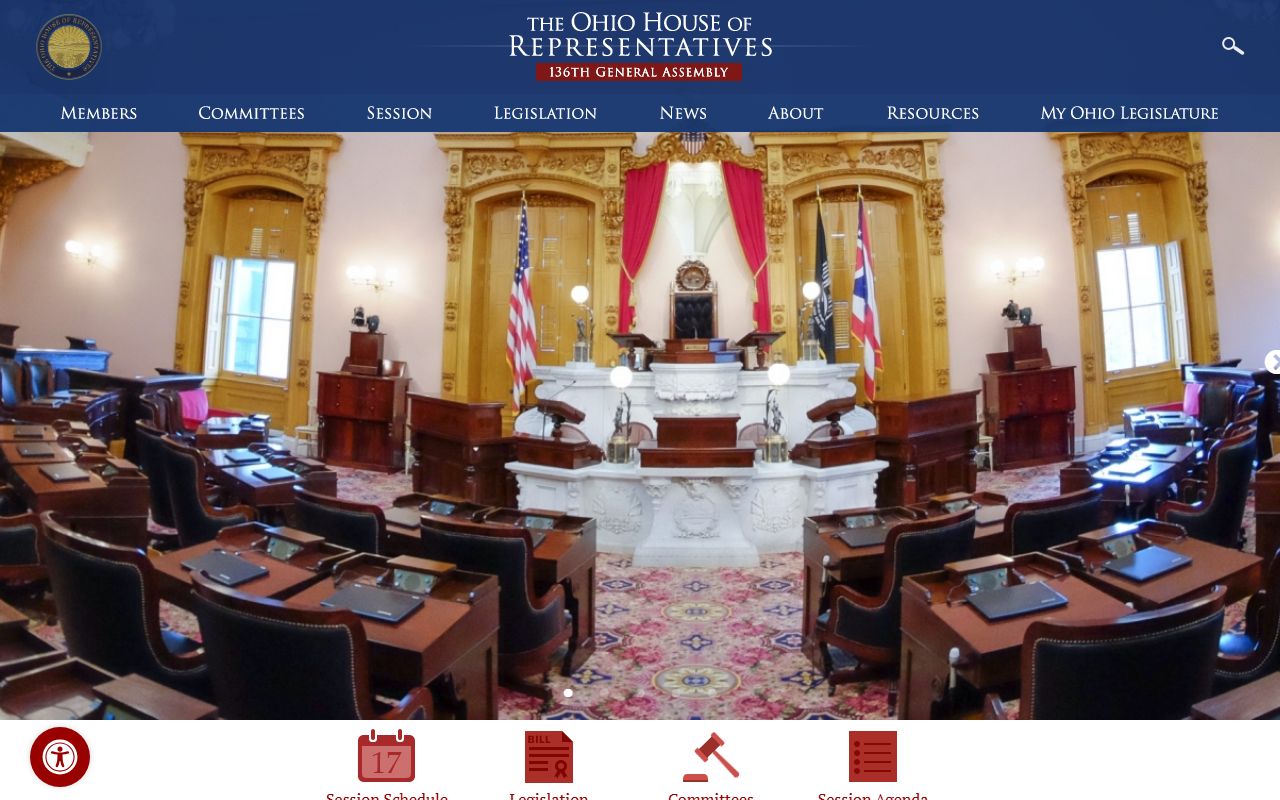
The Ohio House of Representatives website provides access to bill text, committee schedules, and legislative records that are part of the state's public records.
Changes to public records law go through the normal legislative process. Recent updates include the 2025 rule requiring a three-day notice to the public office before filing a Court of Claims complaint. The legislature also sets fee schedules, retention periods, and exemption categories. Watching these bills helps you stay current on what records you can and cannot get.

The Ohio Senate website also offers public access to session records, voting histories, and committee reports for all state legislative matters.
Ohio BMV Public Records
The Ohio Bureau of Motor Vehicles handles vehicle titles, registrations, and driver license records. Title records are public and go through the Clerk of Courts Title Division in each county. Many clerks process tens of thousands of titles every year. Butler County's Title Division, for example, is one of the busiest in the state.
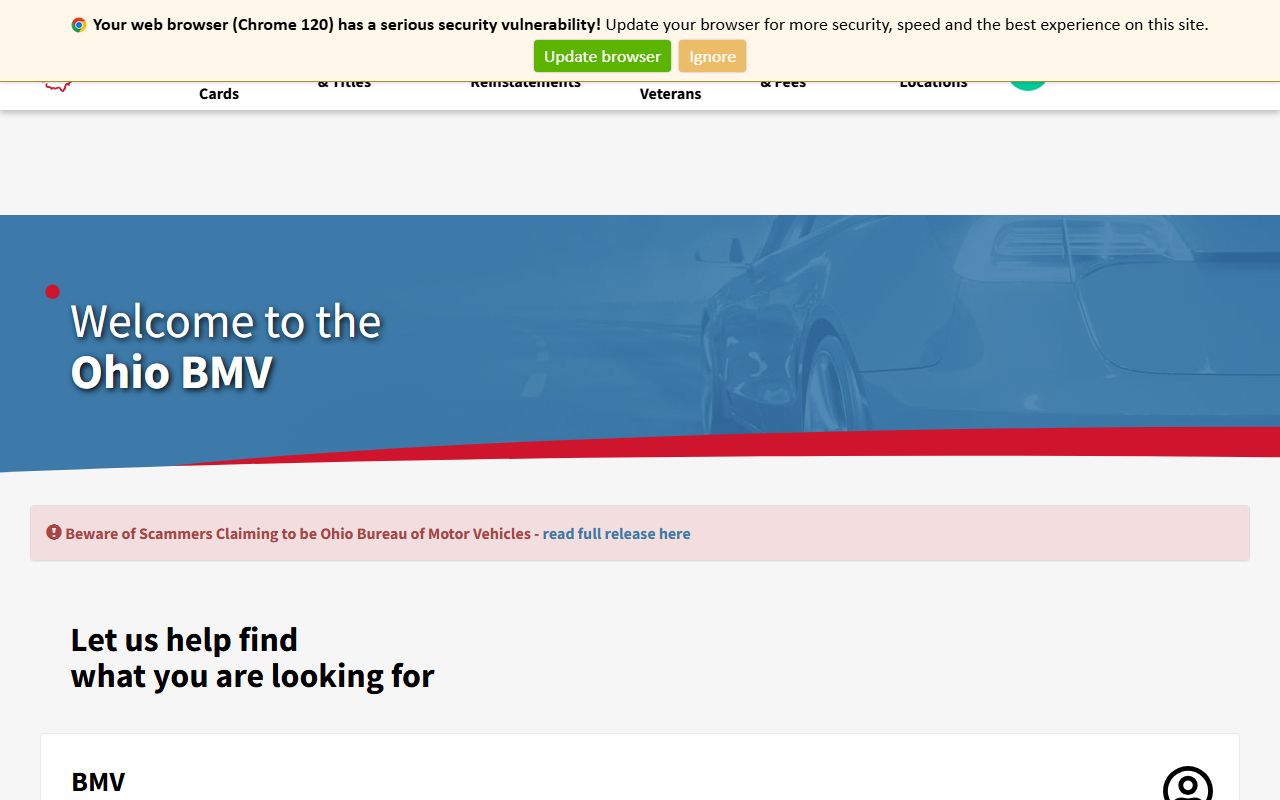
The Ohio BMV website provides access to vehicle title, registration, and driver services information across the state.
Driver history records have some limits. Personal information is protected under both state and federal law. But the title record for a car or boat is a public document you can pull from the county clerk.
Browse Ohio Public Records by County
Each of Ohio's 88 counties maintains its own set of public records through the Clerk of Courts, Recorder, Auditor, and other offices. Pick a county below to find local contact info, online search tools, and details about accessing public records in that area.
Public Records in Major Ohio Cities
Ohio's largest cities are served by county-level offices for most public records. The city you live in determines which county handles your court filings, property records, and vital documents. Pick a city below to find the right county office and local resources.